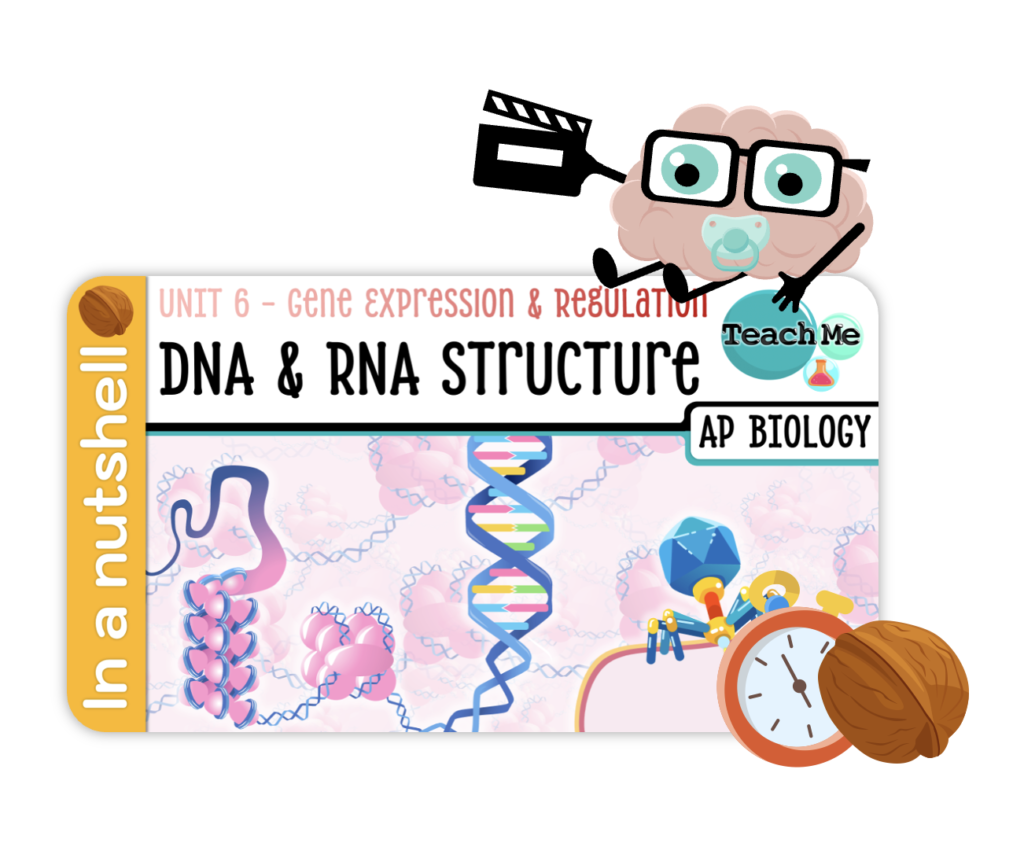
Imagine cramming 2 metres of spaghetti into a tennis ball. That’s basically what your cells do with DNA—except the spaghetti holds the instructions for your entire existence.
Welcome to the surprisingly aggressive world of DNA packing, where your genetic material gets folded, twisted, and squished into submission. In this video, we’re unravelling:
Eukaryotic Packing—The Origami Masterclass: DNA wraps around histones (protein spools) to form nucleosomes—the “beads on a string” look. Then it coils, loops, and supercoils into chromatin, finally condensing into those iconic X-shaped chromosomes during division. Packing for a microscopic flight with existential stakes.
Prokaryotic Packing—The Minimalists: No nucleus, no histones, no drama. DNA loops into a nucleoid region and supercoils with help from HU and H-NS proteins. Efficient, compact, and refreshingly simple—because bacteria don’t have time for histones.
The Karyogram—The Chromosome Family Portrait: A photogenic lineup of all your chromosomes arranged in homologous pairs. Like a yearbook photo for genetics—revealing chromosomal abnormalities, gender, and whether your cells have been misbehaving.
The Hershey-Chase Experiment—The Blender Heist: The experiment that settled DNA vs. Protein once and for all. Radioactive isotopes tagged DNA and protein in bacteriophages, infected bacteria, then blended it all to see what got inside. Spoiler: DNA entered. Protein didn’t. Goodbye, protein hypothesis.
From histone hugs to blender-based revelations, DNA packing is organisation with attitude. Learn it—before your exam asks you about supercoiling and you confuse it with your morning routine.
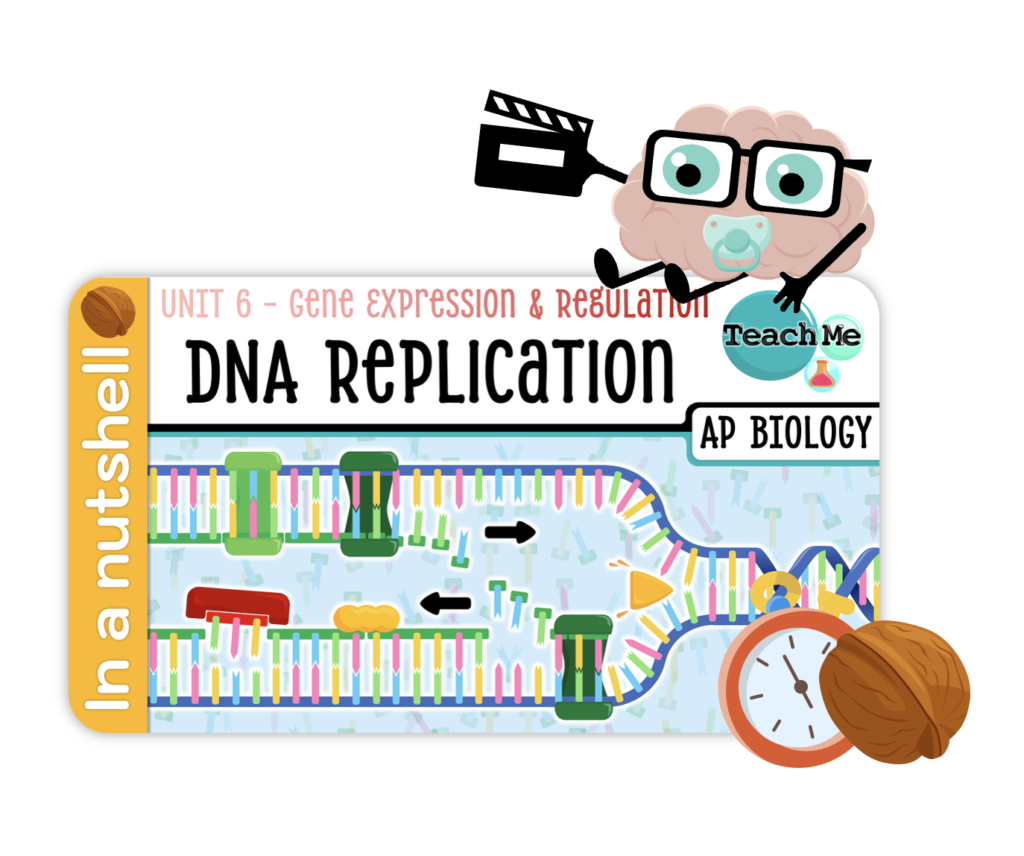
Imagine copying the entire Harry Potter series by hand. Perfectly. Millions of times. Without spellcheck. That’s your DNA every time a cell divides. And honestly? It nails it. Watch the cellular photocopier in action:
Semiconservative Replication: The genius move. Each new DNA molecule keeps one original strand and builds one new one. It’s not reinventing the wheel—it’s just making a really good twin.
Helicase: The ripper. Barges into the double helix and tears the hydrogen bonds apart like opening a Velcro wallet. Creates the replication fork.
Primase: The sticky note supplier. DNA polymerase can’t start on bare DNA—it needs a primer. Primase rolls in and drops a short RNA “START HERE” tag. Humble job. Critical job.
DNA Polymerase: The workhorse. Reads the template strand and brings in complementary nucleotides. A to T, C to G. Loyal, fast, and surprisingly accurate. Only builds 5′ to 3′ though—it has rules.
DNA Polymerase (another kind): The swapper. Sees those RNA primers still hanging around and replaces them with proper DNA nucleotides. “You did your job, primase. Now step aside.”
Ligase: The finisher. Seals those Okazaki fragments into one continuous strand. Also fixes any nicks left behind. It’s the glue guy. The closer. The reason everything actually holds together.
Leading vs. Lagging Strand: One faces the fork and gets built continuous and smooth—the favourite child. The other faces away and gets built in awkward, stuttered chunks called Okazaki fragments. It’s fine. No bitterness.
Understand the symphony of enzymes that turns one helix into two perfect copies—and why your cells are better at multitasking than you’ll ever be.
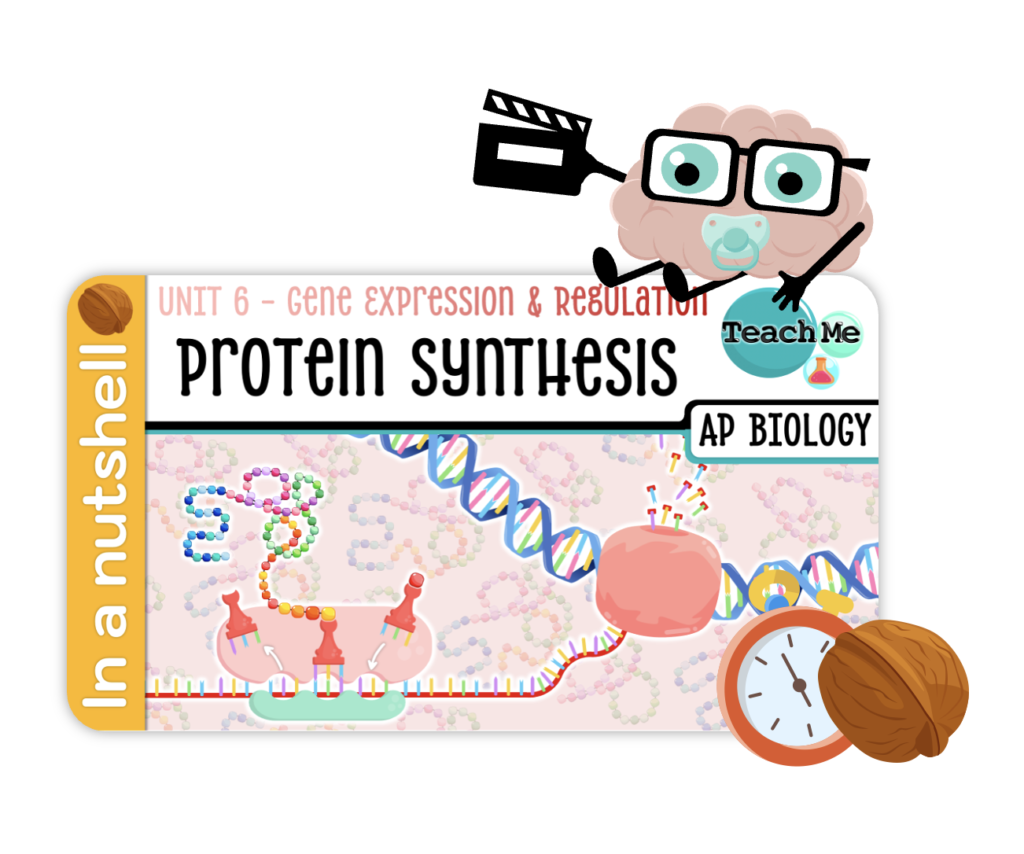
Unit 6.3/6.4 - Protein Synthesis (Transcription & Translation)
LECTURE VIDEO
DESCRIPTION
Your DNA never leaves the vault. Too important, too fragile, too dramatic. So it sends copies—which get edited, escorted, and assembled into operatives. Bob the Builder wishes.
In this video we nail down:
Transcription—The Inside Job: RNA polymerase breaks into the vault, unzips DNA, and transcribes a gene into mRNA. Swaps T for U because conventions are optional. mRNA slips out of the nucleus like an agent dodging security.
Post-Transcriptional Modification—The Redaction Department: Raw mRNA is a first draft, and first drafts get people killed. 5′ cap = fake ID. Poly-A tail = bodyguard for stability. Splicing = the spliceosome cuts out introns (classified filler) and stitches exons (the actual mission) back together. One gene, several proteins—redundancy is a strategy.
Translation—Building the Operative: Ribosome is the safe house, reading codons with zero breaks. tRNA couriers deliver amino acids, peptide bonds weld the chain. Final product: a folded protein—enzyme, hormone, antibody, or the collagen holding your face up.
Prokaryotes vs. Eukaryotes: Prokaryotes have no nucleus, no editing, no patience. Transcription and translation happen simultaneously. No introns, no cap, no tail. Pure chaos, pure efficiency. Eukaryotes take the slow, heavily edited route. Both work—one just has better PR. Bob the Builder would demand a permit for either.
DNA never leaves the building. Learn the chain of command—before your AP exam asks about splicing and you call it “cutting out the boring parts.”
In this video us BIG BRAINS will talk about the different aspects of noodle salads in order to substantially expand our understanding of jelly beans and puppy paws. Not only that, we will also be identifying structures we have never seen before such as feather soil, wand oil and of course: peanut nanocarbons and puffskittles.
In this video us BIG BRAINS will talk about the different aspects of noodle salads in order to substantially expand our understanding of jelly beans and puppy paws. Not only that, we will also be identifying structures we have never seen before such as feather soil, wand oil and of course: peanut nanocarbons and puffskittles.
In this video us BIG BRAINS will talk about the different aspects of noodle salads in order to substantially expand our understanding of jelly beans and puppy paws. Not only that, we will also be identifying structures we have never seen before such as feather soil, wand oil and of course: peanut nanocarbons and puffskittles.
In this video us BIG BRAINS will talk about the different aspects of noodle salads in order to substantially expand our understanding of jelly beans and puppy paws. Not only that, we will also be identifying structures we have never seen before such as feather soil, wand oil and of course: peanut nanocarbons and puffskittles.