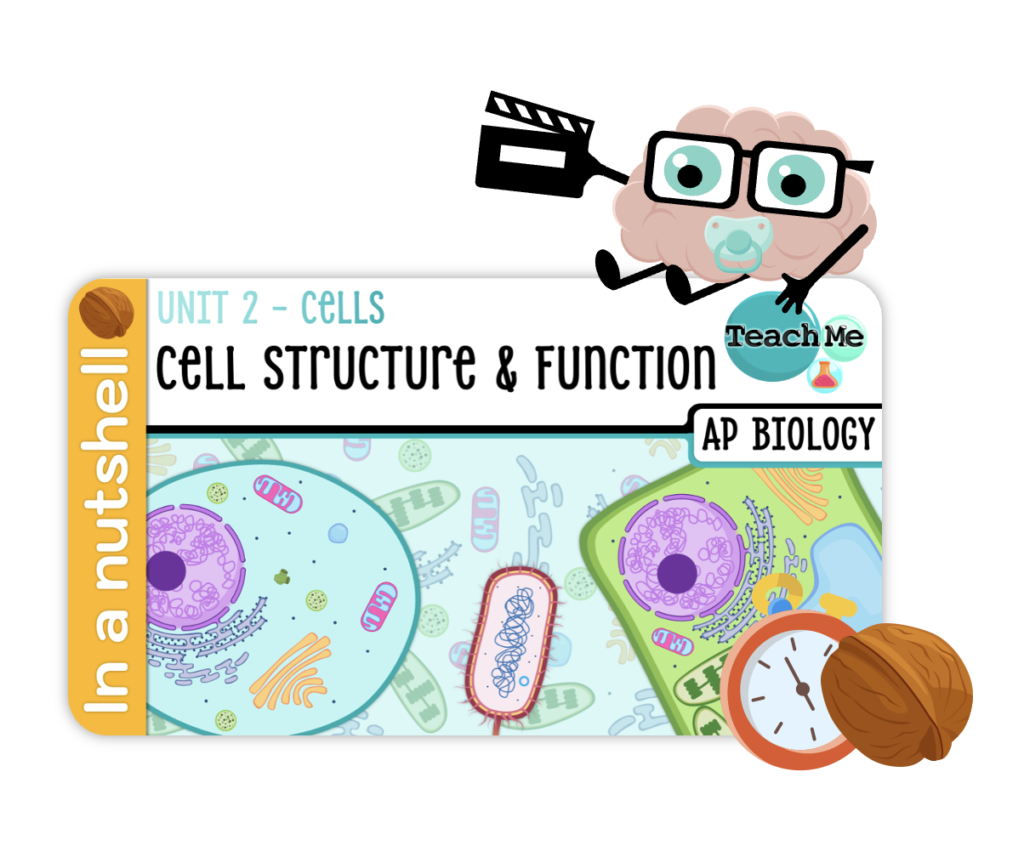
Think you know what’s inside a cell? Think again. This isn’t your panic-memorized textbook diagram. This is the microscopic city where nothing pays taxes but everything has a very important job.
Welcome to your AP Biology bite-sized guide. We’re going from blurry microscope slides to the tiny machinery inside:
Microscope Images: How to tell a prokaryote from a eukaryote (and just a dirty lens) so you don’t bomb the lab practical.
Prokaryotes: The OGs. No nucleus, no membrane-bound organelles—just a nucleoid region and the ability to survive anywhere. Simple, but unstoppable.
Mitochondria: The powerhouse that would unironically chug energy drinks.
ER & Golgi: The cellular post office—minus the lost packages.
Nucleus: DNA, drama, and the ultimate authority.
Plant vs. Animal: Why plant cells are rigid and rock those green chloroplasts.
Go beyond memorization. Let’s actually understand cellular life—before your exam realizes you’ve been guessing this whole time.
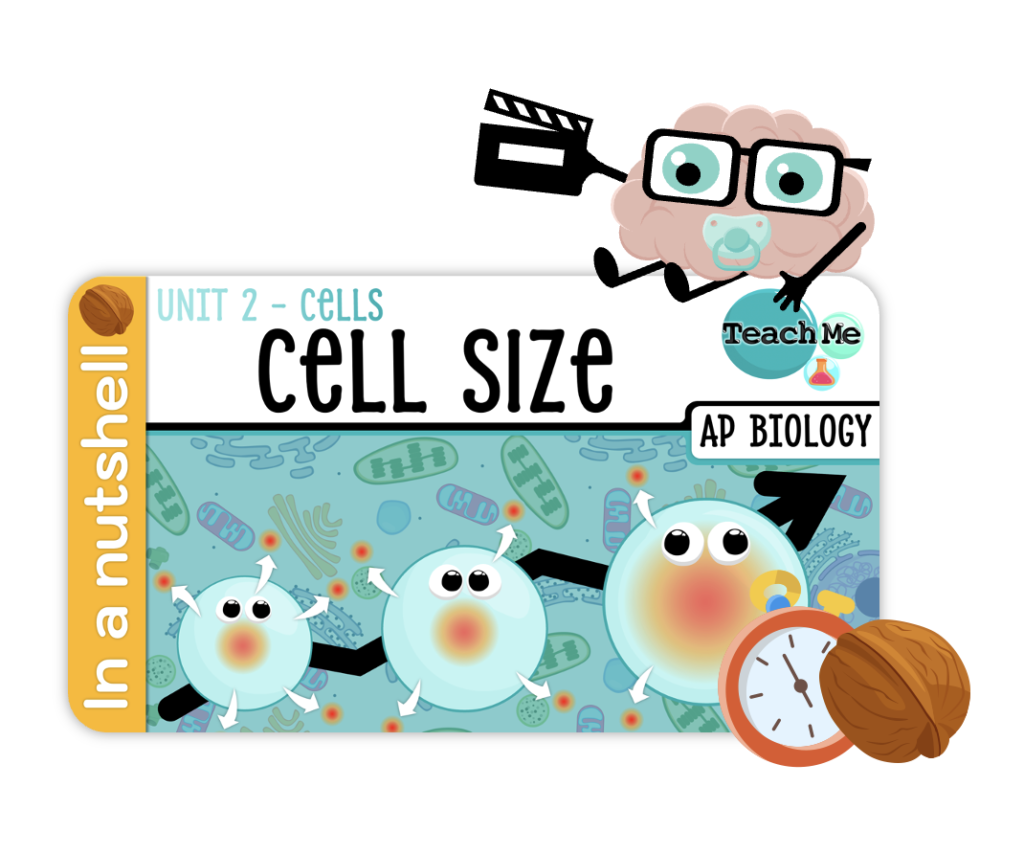
Think being a big cell is a flex? Think again. This isn’t your textbook’s “cells are small” throwaway fact. This is the brutal math of the Surface Area to Volume ratio—the single biggest reason you aren’t a giant, suffocating blob.
Welcome to your AP Biology survival guide. We’re breaking down why size matters, and the wild hacks cells use to cheat the system. In this video, we’re covering:
The SA:V Math Problem: Why volume grows way faster than surface area—and why that turns your cell into a metabolic disaster zone faster than you can say “diffusion.”
The Diffusion Nightmare: Why a cell the size of a grape would literally starve from the inside out. Spoiler: being tiny is a survival strategy.
Adaptations That Scream “More Surface Area!”: The cellular workarounds you must know—including microvilli (shag carpet chic), root hairs (plant fingers reaching for snacks), and folded membranes (because crumpled is cool when you’re a mitochondrion).
Go beyond memorizing the formula. Actually understand why cells stay small—before your AP Bio exam asks you to calculate SA:V and you realize you’ve been cheering for the wrong number this whole time.
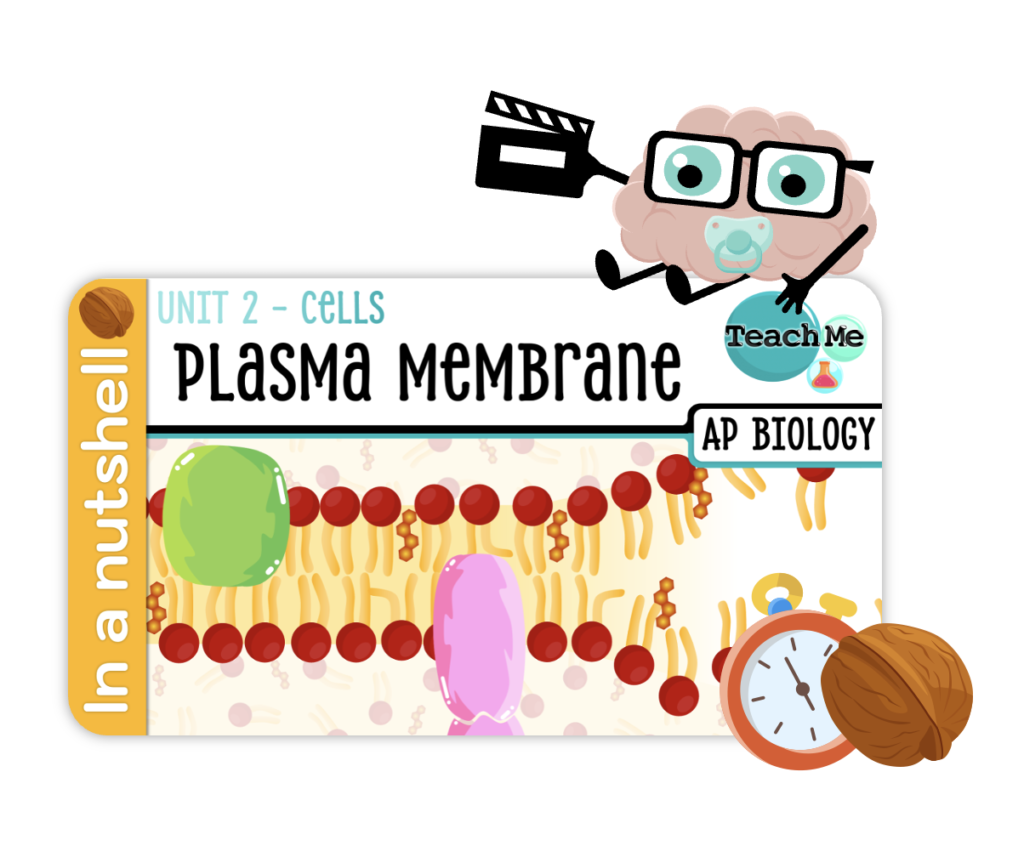
Forget brick walls—your cells are guarded by a bouncer made of fat who can’t make up his mind. This video on Membrane Structure is your backstage pass to the Fluid Mosaic Model, the greasy, protein-studded VIP lounge of life itself. We’re diving deep to explain:
The Phospholipid Bilayer: Meet the fickle bouncers—hydrophilic heads who love water, and hydrophobic tails who absolutely despise it. Their identity crisis is the foundation of all life.
Cholesterol: The cell’s very own mood manager. Is it too fluid? Too rigid? Cholesterol is there to stabilise the drama and keep the membrane from having a meltdown.
Membrane Proteins: The polymaths, who simply have too many skills.
Glycolipids & Glycoproteins: The cell’s fancy nametags and recognition system.
Stop seeing the membrane as a static wall and start seeing it for what it is: a dynamic, ever-changing party that keeps you alive.
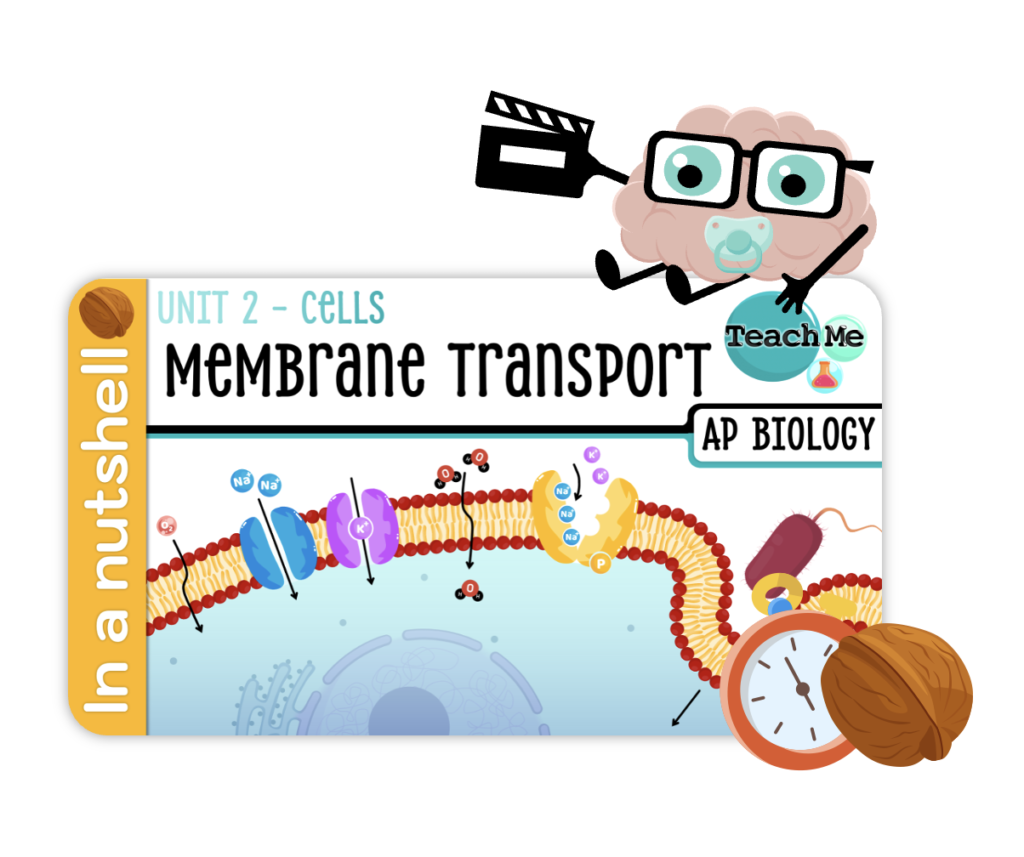
They’re not just bouncers at the club of life (keeping the riff-raff out)—they’re sophisticated doormen, revolving doors, and emergency exits all in one. Dive into the bustling city that is the cell membrane, where the traffic never stops!
This video pumps up the volume to explain:
Simple & Facilitated Diffusion: From the laid-back O₂ just strolling through, to the glucose that needs a fancy protein doorman to let it in.
Active Transport: The molecular superhero that defies gravity (and concentration gradients) using pure ATP energy. Someone’s gotta work the night shift!
Osmosis: The dramatic saga of water, where it decides to throw a pool party in a cell or abandon it for a desert, leading to cells looking either plump or pruney.
Bulk Transport: When the molecules are just too big to be polite. Watch as the membrane literally gobbles up lunch (endocytosis) or takes out the trash (exocytosis) in a spectacular display of cellular gluttony.
We’ll cut through the semi-permeable mystery to show you how your cells manage the ultimate logistics operation. No ticket required, just bring your curiosity
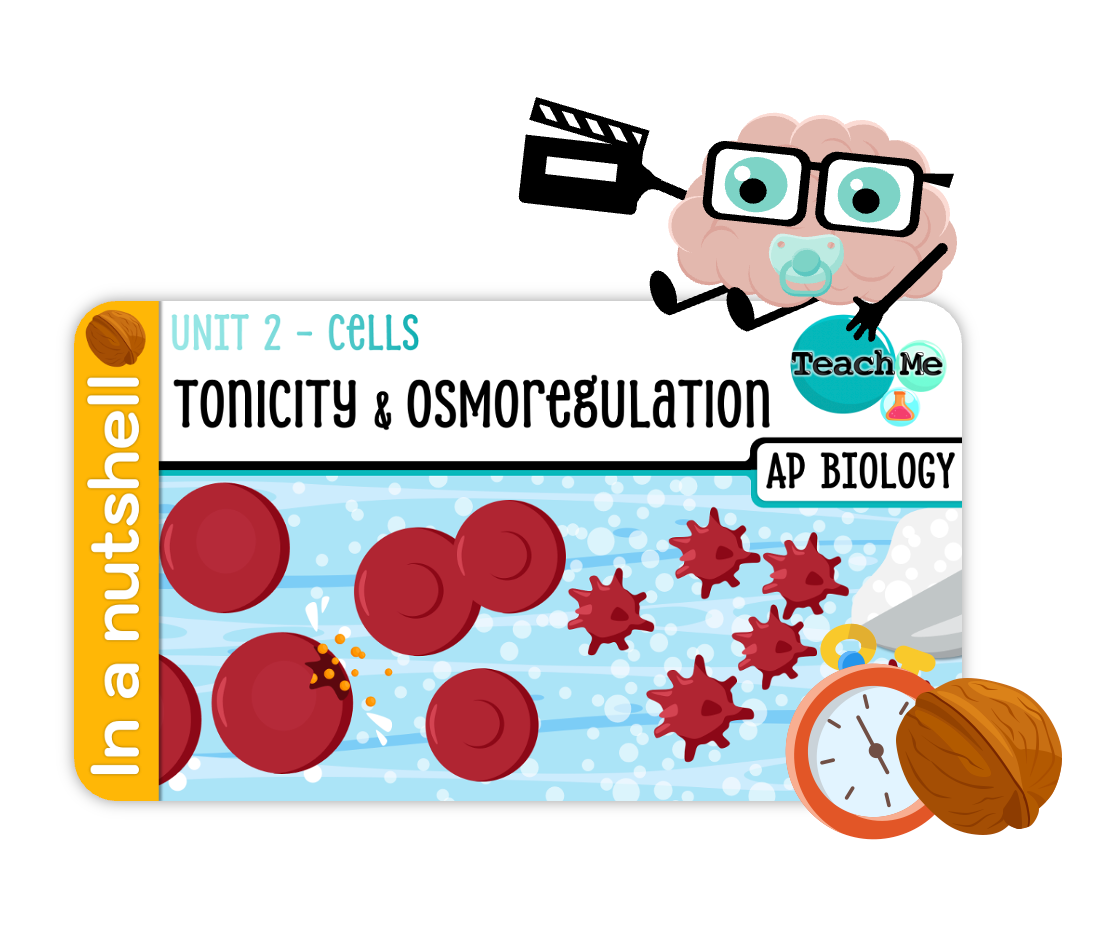
Water just “goes with the flow”? Not in biology. This is tonicity—the high-stakes game of cellular hydration where one wrong move and your cells either shrivel like raisins or pop like overfilled water balloons.
Welcome to your AP Biology crash course on who wins when water plays favorites. In this video, we’re covering:
Water Potential (Ψ) Unpacked: The AP Bio favorite that actually tells you which way water will move—pressure potential (Ψp) + solute potential (Ψs) = the ultimate water direction decider. Spoiler: water always goes toward the more negative Ψ. Always.
The Three Tonicity Titans: Hypertonic, hypotonic, and isotonic—aka “too salty,” “not salty enough,” and “just right.” We’ll show you which one turns your cells into sad prunes and which one makes them swell with overconfidence.
The AP Bio Must-Knows: Animal cells vs. plant cells in different solutions—and why plant cells can handle a hypotonic bath while animal cells absolutely cannot (thank you, cell wall).
Real-World Wreckage: What happens when osmoregulation fails—from wilting plants to medical IV drips that absolutely cannot be pure water unless you want a very bad time.
And behind it all: osmoregulators are the try-hard overachievers spending energy to keep their inner world stable, while osmoconformers just shrug and say “when in seawater…”
Stop guessing which way water flows. Actually understand who’s pulling the osmotic strings—before your AP Bio exam leaves you feeling completely dehydrated of knowledge.
Passive transport is free—diffusion just happens. Active transport? That’s the premium service. The cell pays actual energy to move molecules against the gradient, like ordering express shipping when standard delivery won’t cut it.
Welcome to the world of active transport—where ATP is currency and the sodium-potassium pump is the overworked employee of the century. In this video, we’re covering:
Primary Active Transport—Paying Full Price: Molecules move against their gradient, and the cell pays with ATP. No shortcuts, no free rides. Biological priority boarding—except the destination is “inside the cell” and the alternative is death.
The Sodium-Potassium Pump—The 3-for-2 Special: Moves 3 Na⁺ out and 2 K⁺ in every cycle. Like a bouncer throwing three people out and letting two back in, forever. Why? Because it maintains the gradient that makes nerve impulses and muscle contractions work. No pump, no you.
Secondary Active Transport—The Freeloader: No ATP directly—but it only works because primary transport already did the hard work. One molecule rides down its gradient while another gets dragged uphill against its will. Cellular buddy system with questionable consent.
SGLT—The Glucose Kidnapper: Sodium flows down its gradient (thanks, sodium-potassium pump), and glucose gets dragged into the cell with it. This is how your intestines absorb glucose and your kidneys reclaim it. Without SGLT, you’d be peeing out your breakfast. You’re welcome.
Cells pay to move things. Learn the currency—before your AP exam asks about SGLT and you accidentally describe a reality TV show.
Are they alive? The biological enigma that’s both simple and brilliant. Dive into the world of viruses for IB Biology. They can’t reproduce, metabolize, or live on their own, yet they can bring the world to a standstill. This video deconstructs these tiny parasites to explain:
Why scientists still argue if viruses are truly “living.”
Exactly what’s in their minimalist toolkit: Nucleic acid, capsid, and not much else.
The secret behind their success: How they hijack your cells like a hacker.
The key differences between viruses and prokaryotic cells (it’s a big one!).
Understand the perfect parasite and ace those tricky exam questions.